


 David Schwartz
A toilet water problem is not always easy to spot. A toilet may keep running because of a worn flapper or faulty fill valve, while water can also leak from the shut-off valve, supply line, or connection.
These problems are different, but both can lead to unnecessary water use and higher water and sewer costs if they are not addressed quickly.
If your toilet shut-off valve is leaking, the first step is to find exactly where the water is coming from. A leaking manual valve or plumbing connection should be repaired, while continuous water flow inside a running toilet requires a different approach.
This guide explains how to troubleshoot a leaking toilet shut-off valve in five steps, when a repair or replacement may be needed, and how multifamily property owners can better control ongoing toilet water waste.
First Check: Is the Toilet Shut-Off Valve Really the Problem?
.png?width=840&height=560&name=image%20(30).png)
Before making any repair, determine what type of toilet leak you have.
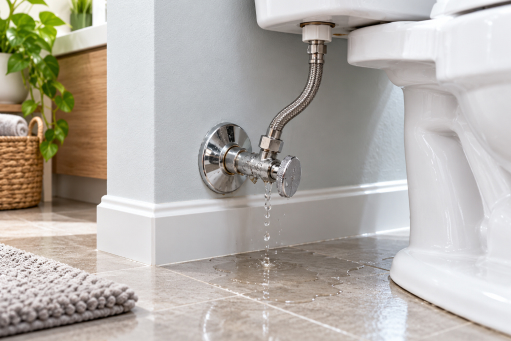
A standard toilet shut-off valve, also called an angle stop, controls the water supply going to the toilet. If the valve, fitting, or supply line is physically leaking, you may notice water around the connection or on the bathroom floor.
But many toilet leaks look very different.
A worn flapper, faulty fill valve, tangled chain, or another internal toilet problem can allow water to keep moving from the tank into the bowl and down the drain. In this situation, there may be no water on the floor at all.
The toilet simply keeps calling for replacement water.
This is where Toilet Scrooge™ can help. It automatically controls the water supply to the toilet based on bathroom occupancy, helping limit continuous water flow when the bathroom is vacant.
The faulty flapper, fill valve, or other toilet component still needs to be repaired. Likewise, a physically leaking toilet shut-off valve, supply line, or plumbing connection requires its own repair.
For multifamily properties, internal running-toilet problems can be especially difficult to manage because they may continue for hours or days before a resident notices or reports them.
|
Don't Let a Running Toilet Keep Calling for Water Toilet Scrooge™ automatically controls when water is available to the toilet, helping limit continuous water waste when the bathroom is vacant.
|

If internal leakage isn’t the problem, let’s check further on what to do if your toilet shut-off valve is leaking.
Toilet Shut-Off Valve Leaking? Follow These 5 Steps
If the water is coming from the shut-off valve, supply line, or nearby connection, use these steps to narrow down the problem.
Step 1: Find the Exact Source of the Leak
Start by drying the shut-off valve, pipe, supply line, fittings, and surrounding area. Once everything is dry, watch closely to see where moisture first appears.
Check these common leak points:
- Around the valve handle or stem: This may point to a problem around the valve stem or packing area.
- Where the valve meets the water pipe: The connection between the valve and plumbing line may be leaking.
- Where the supply line connects to the valve: The valve may be fine while the supply-line connection is loose or damaged.
- Along the supply line: Look for cracks, corrosion, deterioration, or other visible damage.
Also note when the leak appears. Does it happen continuously, only after flushing, or when the shut-off valve is opened or closed?
Finding the exact source first helps avoid repairing or replacing the wrong part.
Step 2: Check for Loose Connections or Visible Damage
Once you know where the water is coming from, inspect the valve and nearby components. Look for loose fittings, corrosion, mineral buildup, cracks, a damaged or worn supply line, moisture around the valve stem, a valve that is difficult to turn, or a valve that does not fully close.
Visible corrosion or heavy mineral buildup can be a sign that the leak has been present for some time.
For multifamily properties, these checks can also be included in routine unit inspections so damaged valves and supply lines are found before they turn into larger plumbing problems.
Step 3: Carefully Check the Leaking Connection
Some shut-off valve leaks may come from a loose connection.
For example, a leak around the valve stem may sometimes involve the packing area, while water near the supply line may come from the fitting connecting the line to the valve.
If a connection needs tightening, make small adjustments and check the area again. However, avoid overtightening, as too much force can damage a fitting, valve, supply line, or compression connection and make the leak worse.
If the valve is cracked, badly corroded, or visibly damaged, tightening it is unlikely to solve the problem.
When you are unsure where the leak is coming from or how the valve is connected, have a licensed plumber inspect it.
Step 4: Test the Valve and Toilet Again
After the appropriate adjustment or repair, dry the area completely. Then:
- Restore the water supply if it was turned off
- Slowly open the shut-off valve
- Watch the valve and fittings for moisture
- Flush the toilet
- Check the supply line and connections again
- Wait several minutes and inspect the area one more time
Also check whether the valve can fully stop water from reaching the toilet.
If the leak comes back or the valve cannot properly shut off the water, the component may need to be replaced.
Step 5: Replace the Damaged Part if the Leak Continues
Not every leaking toilet shut-off valve can be fixed with an adjustment.
Replacement may be needed if:
- The valve body is cracked
- The valve is badly corroded
- Water continues leaking around the stem
- The valve will not fully stop the water
- The supply line is damaged
- The connection cannot be properly sealed
- The valve is difficult or unreliable to operate
- The leak returns after repair
The correct repair depends on the source of the leak. A damaged supply line requires a different repair from a failed shut-off valve or leaking plumbing connection.
If the valve needs to be removed or the plumbing connection needs work, consider having a licensed plumber handle the repair.
Why Running Toilets Are Harder to Catch Across Multifamily Properties
A multifamily property may have dozens or hundreds of toilets. Each one has parts that can wear out over time, including flappers, fill valves, chains, supply lines, and shut-off valves.
Maintenance teams cannot inspect every bathroom every day. Residents may also:
- Not notice a slowly running toilet
- Get used to the sound
- Assume the toilet is working normally
- Delay reporting the problem
- Not realize water is continually going down the drain
This creates a gap between when the toilet starts wasting water and when maintenance finds and repairs the problem. During that time, the toilet can keep calling for replacement water.
For landlords who pay the utility bill, that unnecessary use can add to both water and sewer costs.
How Toilet Scrooge™ Helps Limit Running-Toilet Water Waste
Toilet Scrooge™ is designed to add automatic water control at the toilet.
Unlike a standard manual shut-off valve that normally stays open all the time, Toilet Scrooge™ controls the water supply based on bathroom occupancy.
When Someone Enters the Bathroom
The motion sensor detects that someone is present and allows water to flow to the toilet.
While the Toilet Is in Use
Water remains available so the toilet can operate normally.
After the User Leaves
The valve closes the water supply when the bathroom is vacant.
If a toilet has a worn flapper or another internal problem, this helps limit how long replacement water can continue flowing when nobody is using the bathroom.
The faulty toilet part still needs to be repaired. Toilet Scrooge™ helps control the water waste that can occur before the problem is found and fixed.
Does Toilet Scrooge™ Fix a Leaking Manual Shut-Off Valve?
No. A leaking angle stop, damaged supply line, faulty fitting, or plumbing connection still needs to be repaired or replaced.
Toilet Scrooge™ solves a different problem.
It helps control water supplied to the toilet so a running toilet cannot continue receiving replacement water indefinitely while the bathroom is vacant. This distinction is important to understand:
| Problem | What Needs to Happen |
|---|---|
| Manual shut-off valve is leaking | Repair or replace the valve |
| Toilet supply line is leaking | Repair or replace the supply line |
| Connection or fitting is leaking | Repair the plumbing connection |
| Flapper or fill valve is faulty | Repair the failed toilet component |
| Running toilet keeps calling for water | Automatic water control can help limit continued waste until the repair is made |
For multifamily property owners, combining regular maintenance with automatic water control provides a more practical way to manage toilet-related water waste.
Fix the Leak and Limit Future Water Waste Bills
If your toilet shut-off valve is leaking, start by identifying exactly where the water is coming from.
A damaged valve, fitting, or supply line should be repaired. If the problem is inside the toilet, the faulty flapper, fill valve, chain, or other component also needs attention.
For multifamily property owners, the bigger challenge is what happens before anyone knows a toilet has started running.
The Water Scrooge™ provides water saving solutions designed to help property owners reduce unnecessary water use and better manage water and sewer costs across their properties.
One of them is the Toilet Scrooge™. It addresses running-toilet waste by automatically shutting off the toilet’s water supply when the bathroom is vacant. This can limit continuous water use while the underlying toilet problem is waiting to be found and repaired.
|
Don't Let Running Toilets Keep Wasting Water Add automatic toilet water control across your property and help reduce unnecessary water and sewer costs with Toilet Scrooge™.
|
