


 David Schwartz
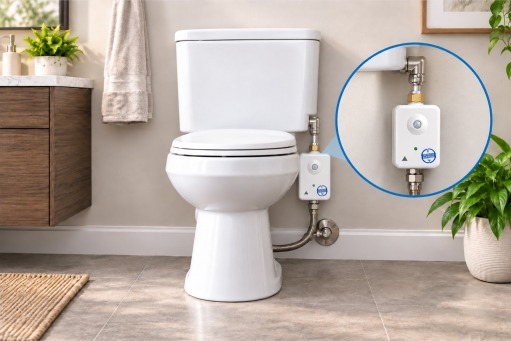
Managing water waste in a multi-unit rental property is difficult because landlords cannot see what is happening inside every bathroom every day. A toilet flush may keep running for hours or days before a resident notices it, reports it, or maintenance reaches it. That’s where automatic toilet shutoff valves help landlords prevent water waste.
An automatic toilet shutoff valve controls the water supplied to a toilet when it is not being used. Instead of allowing a leaking or malfunctioning toilet to keep drawing water continuously, the valve can automatically restrict the supply and prevent water waste.
If you own a multi-unit property and are paying a hefty water usage bill, this device adds a layer of protection against unnecessary water and sewer costs and supports a more proactive approach to water management across the building.
Why Toilet Leaks Are So Costly in Rental Properties
The majority of toilet leaks do not create a puddle or visible plumbing emergency. Instead, water keeps running continuously from the tank down into the drain.
Common causes include worn or misaligned flappers, fill valves that aren’t shutting off correctly, stuck flush chains, ageing toilet components, and so on. In this situation, as the water doesn’t overflow and stays inside the toilet, residents may not recognize the problem immediately, and the amount of waste can vary dramatically.
EPA WaterSense estimates that a small toilet leak can waste about 860 gallons per month (GPM), a medium leak can waste about 8600 GPM, and a large leak can cause 4300 gallons of water to be wasted in a single day.
Those figures show why toilet leak prevention matters, especially in rental housing, where delays between a leak developing, being discovered, and being repaired can cause water and sewer bills to rise significantly.
How Automatic Toilet Shutoff Valves Work to Prevent Water Waste
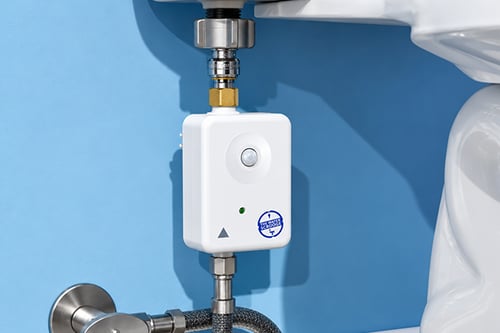
An automatic toilet shutoff valve controls the water supplied to a toilet tank under defined conditions. Depending on the product, the automatic water cutoff operation may be based on motion, sensors, timers, water-flow patterns, or other methods.
It differs from the conventional toilet shutoff valve, often called an angle stop, that must be manually operated by a resident, plumber, or maintenance technician. Automatic valves introduce automated control of water inflow in the fixture.
The valves that are designed based on a usage-control system are installed in the toilet’s water-supply path. When its activation condition is met, the valve opens and allows the toilet tank to receive water. When the usage ends, the valve closes and stops additional water supply.
Consider a toilet with a worn flapper that no longer seals correctly; water can escape from the tank into the bowl. With a continuously open supply, the fill valve repeatedly replaces that water in the tank. The cycle can continue even when no one is using the bathroom.
By closing the supply when water is not needed, an automatic valve can cut that continuous water supply. The failed component still requires repair, but the toilet will not keep wasting new water as the automatic valve remains closed.
Does That Mean Leakage Repair Is Not Needed?
No. Automatic Shutoff is not an alternative for water leakage repair. Maintenance teams still need to inspect toilets, replace worn parts, correct fill-valve problems, and respond to resident reports.
EPA recommends checking for silent leaks and investigating toilets that run constantly or send water continuously into the overflow tube.
The biggest challenge it solves is preventing water wastage between the time a leak starts and gets repaired.
|
Ready to Reduce Toilet Water Waste? Add automatic water control to your rental units and help limit the amount of water a leaking toilet can waste before the problem is repaired.
|

Why Automatic Toilet Shutoff Valves Are Beneficial For Landlords
For landlords, the same toilet problem can appear across many units with different fixture ages, residents, and maintenance histories. Installing automatic valves can be beneficial in the following ways:
1. Reduce Water Bills in Rental Properties
Water and sewer rates vary, so no device can guarantee the same savings at every property. Still, reducing avoidable consumption can help Reduce Water Bills in Rental Properties where the owner pays the water bill.
If a valve prevents a malfunctioning toilet from continuously drawing replacement water, it can reduce the number of unnecessary gallons consumed before the problem is repaired.
2. Reduce Dependence on Resident Reporting
Residents may ignore an occasionally refilling toilet, become accustomed to running-water sounds, or delay submitting a maintenance request. Automatic water control provides another layer of protection that does not depend entirely on a resident recognizing a leak.
This is especially relevant in multifamily housing, where property teams cannot continuously monitor every fixture inside every occupied unit.
3. Limit Waste Between Maintenance Visits
Even a strong maintenance team cannot inspect every toilet every day. Components can fail between scheduled visits.
This is where water saving devices for landlords can support operations by reducing exposure between failure, detection, and repair.
Automatic control does not eliminate the need for maintenance. Instead, it can reduce the amount of time a malfunctioning fixture has unrestricted access to the property's water supply.
4. Improve Water Management Across Multiple Units
Water management becomes more complex as a portfolio grows. A building with dozens or hundreds of bathrooms also has dozens or hundreds of flappers, fill valves, supply connections, and other components that can eventually require attention.
EPA provides multifamily owners and managers with water-assessment resources to inventory fixtures, identify efficiency projects, and reduce water use and operating costs. Automatic toilet control can fit within that broader management approach.
5. Support Multifamily Water Conservation
Multifamily Water Conservation is not only about asking residents to use less water. It can also involve improving how fixtures and building systems manage water.
Reducing avoidable water loss in toilet fixtures can complement efficient shower fixtures, faucet controls, leak monitoring, regular maintenance, and water benchmarking.
This gives landlords a more comprehensive way to address water consumption instead of relying on a single conservation measure.
For landlords looking for a more practical way to control toilet water waste at the fixture level, Toilet Scrooge™ is designed specifically for this challenge. It automatically controls when water can flow to the toilet, helping reduce unnecessary water use without relying on residents to manually shut off the supply.
How Does Toilet Scrooge™ Take Water Leak Prevention Further?
The Toilet Scrooge™ applies the automatic shutoff concept directly at the toilet. The device uses a motion sensor to determine when a user is present. When the sensor is activated, the valve opens and allows water to flow to the toilet.
The device uses a motion sensor to determine when a user is present. When the sensor is activated, the valve opens and allows water to flow to the toilet. After the user leaves, the valve closes, preventing the fixture from continuously receiving new water while it is not being used.
This can be relevant when a toilet has a leaking flapper or a malfunctioning fill component. The device does not repair those parts. Instead, it is designed to keep the toilet from continuously calling for replacement water when no user is present.
The product also uses a miniature water wheel to harvest energy from water flow and recharge its battery during flushing. For landlords, this point-of-use approach adds automatic control at the individual fixture without relying on residents to manually shut off the supply.
It is also designed with practical installation and ongoing use in mind. Toilet Scrooge™ can be installed in minutes without hard wiring, while its miniature water wheel uses water flow during flushing to recharge the battery. This means landlords do not have to plan for routine battery replacement.
The device is designed for tank-filled toilets with standard 3/8-inch connections, making it suitable for deployment across many rental-property bathrooms.
|
Put a Stop to Unnecessary Toilet Water Use Add automatic toilet water control to your rental property with Toilet Scrooge™ and reduce the risk of running toilets wasting water between maintenance visits.
|

Prevent Toilet Water Waste Before It Becomes a Bigger Expense
A running toilet can be easy to overlook because wasted water often disappears quietly down the drain. Across a multifamily property, those unnoticed losses can add up.
An automatic toilet shutoff valve like the Toilet Scrooge™ adds a preventive layer by limiting when a toilet has access to incoming water. Used alongside routine inspections, timely repairs, efficient fixtures, and water monitoring, it can support a more proactive approach to multifamily water conservation.
If running toilets and rising water costs are affecting your property's operating expenses, Toilet Scrooge™ gives you a more proactive way to control unnecessary toilet water use across your units. By automatically stopping water flow when the toilet is not in use, it helps reduce the amount of water that can be wasted before a leak is discovered and repaired.
Ready to take greater control of toilet water waste across your property? Get Toilet Scrooge™ for your property today.
FAQs

An automatic toilet shutoff valve controls when water is supplied to a toilet. Depending on its design, it may operate based on motion, sensors, timers, flow patterns, or other conditions, reducing the need for someone to manually operate the supply valve.

It can help limit continued water loss by stopping additional supply water when the valve is closed. However, it does not repair the worn flapper, faulty fill valve, or other component causing the running condition.

A conventional toilet shutoff valve must be manually opened or closed. An automatic valve changes the water supply according to predefined operating conditions.

Not necessarily. Some automatic systems include leak detection, while others control water based on usage conditions such as occupancy. Landlords should verify the functions of the specific device they are considering.

They can be useful where landlords want point-of-use control over toilet water supply. Suitability depends on plumbing compatibility, installation requirements, maintenance needs, and the property's broader water-management plan.