


 David Schwartz
|
Quick Answer One way to reduce hotel operating costs is by cutting water waste by fixing leaking toilets, controlling shower and faucet water flow, reducing hot-water waste, and regularly checking guest bathrooms for leaks. These simple improvements can lower water, sewer, and energy bills without compromising guest comfort or requiring expensive bathroom renovations. |
An empty hotel room may not bring in any money, but a running toilet inside that room can still cost you hundreds of dollars in wasted water. Now imagine the same problem across several guest rooms in your hotel.
From staff salaries to housekeeping and maintenance, hotel operating costs can quickly add up. While some expenses are necessary to keep guests happy, others come from waste that can easily go unnoticed. Water is one of them.
According to the U.S. Environmental Protection Agency (EPA), hotels and other lodging facilities account for approximately 15% of all water used in commercial and institutional buildings in the United States.
The good news is that you don't need to renovate every bathroom or ask guests to take shorter showers to lower your water bills. With a few simple changes to your guest room toilets, showers, and faucets, you can reduce water waste and keep your hotel utility costs under control.
Let's look at where your hotel uses the most water and what you can do to save more.
How Much Water Does a Hotel Use?
How much water your hotel uses depends on several factors, including the number of rooms, occupancy rates, bathroom fixtures, laundry services, restaurants, and swimming pools.
According to the EPA's WaterSense at Work benchmarking report, the median hotel water use across 1,488 properties was 33,500 gallons per guest room per year. This figure includes water used throughout the property, not just inside guest rooms.
Here is a breakdown of where water is typically used in hotels:
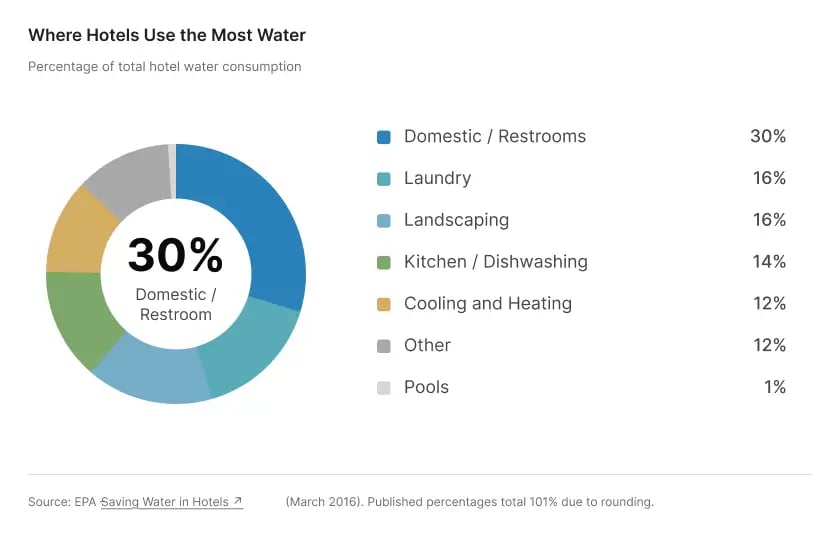
As the chart shows, domestic and restroom water use accounts for the largest share at 30%. This includes everyday activities such as showering, flushing toilets, and washing hands.
That makes bathrooms one of the best places to start your hotel water conservation efforts. Even a small amount of water saved in each guest room can make a big difference across your entire property.
7 Ways to Reduce Hotel Operating Costs Through Water Waste Reduction
Reducing water consumption doesn't have to involve expensive plumbing upgrades or major bathroom renovations. You can start by making small improvements to your existing fixtures and changing how your team manages water waste.
Here are seven practical ways to lower your hotel's water bills.
1. Stop Running Toilets in Vacant Guest Rooms
Guests may not always report a running toilet. Once they check out, the toilet could continue wasting water until someone notices the problem.
A worn flapper or a faulty fill valve can cause water to continuously flow from the tank into the bowl.
Have your maintenance team regularly inspect toilets and replace damaged parts. You can also install an automatic toilet shut-off valve to help control water waste between inspections.
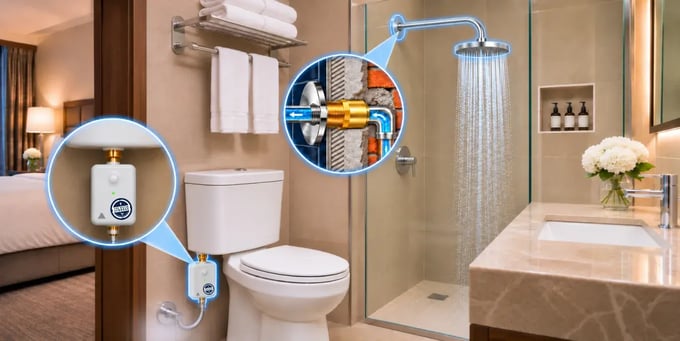
The Toilet Scrooge™ automatically shuts off the toilet's water supply when the bathroom is vacant. This helps prevent continuous water waste from running toilets, even when a guest room remains empty for several days.
2. Control Water Flow in Guest Room Showers
A good shower is an important part of a comfortable hotel stay. However, some showers use more water than guests actually need.
Suppose a guest takes a 10-minute shower. Reducing the shower's flow rate from 2.5 gallons to 2 gallons per minute can save 5 gallons of water during that shower alone.
Multiply that by dozens or even hundreds of showers every day, and the savings can be significant.
The Shower Scrooge™ is a pressure-compensating shower flow controller that helps limit unnecessary water use while maintaining consistent water flow.
The device stays hidden behind the shower fixture, making it difficult to remove or tamper with. You can also keep your existing compatible showerheads instead of replacing them throughout the hotel.
3. Reduce Water Waste While Showers Warm Up
Think about what most hotel guests do before taking a shower. They turn on the water, wait for it to get warm, and may step away to get their clothes or toiletries ready.
By the time they step into the shower, several gallons of water may have already gone down the drain.
Your hotel pays for that water as well as the energy needed to heat it.
The ShowerStop® helps reduce this waste by automatically slowing the water flow once it reaches approximately 95°F.
When guests are ready to shower, they can restore normal water flow using the supplied control.
This allows your hotel to reduce hot-water waste without asking guests to take shorter or colder showers.
4. Install Water-Saving Faucet Regulators
Bathroom faucets are used multiple times throughout a guest's stay.
Older faucets may release more water than necessary for these simple tasks. While the extra water used during each visit may seem small, it can add up across every bathroom in your hotel.
Installing faucet aerators or flow regulators can help control how much water comes out of the tap while keeping it suitable for everyday use.
You can start by checking the flow rate of your existing faucets and upgrading those that use excessive amounts of water.
Explore The Water Scrooge™ water conservation kits to find suitable water-saving solutions for your guest bathrooms.
|
Cut Water Waste in Every Guest Bathroom Reduce unnecessary toilet, shower, and faucet water use with practical water-saving solutions that help lower your hotel's monthly utility bills.
|

5. Check Guest Bathrooms for Leaks During Room Turnover
Your housekeeping team visits guest rooms regularly. Make them one of your first lines of defense against water waste.
Ask your housekeeping staff to check for the following:
- Faucets that continue dripping after being turned off.
- Toilets that keep running after flushing.
- Showerheads that drip when not in use.
- Water collecting around toilet bases or under sinks.
- Damp walls or floors around bathroom fixtures.
If your team finds a problem, have them report it to maintenance before the next guest checks in.
Keeping a record of these issues can also help you identify rooms with repeated plumbing problems and decide which fixtures need replacing.
6. Manage Water Flow Across the Entire Hotel
While individual bathroom upgrades are important, hotel water conservation should also include a review of the building's main water system.
If your hotel experiences excessive water pressure, uneven water flow between floors, or unusually high water bills, have a licensed plumber inspect your plumbing system.
You can also explore building-level water management devices such as The Smart Valve™.
It is designed to compress air present in the water supply, helping reduce the air volume that may be recorded by certain water meters. It is installed near the building's water meter and adjusted according to the property's water system.
Unlike other devices, The Smart Valve™ addresses potential avoidable water charges at the building level rather than directly reducing guest water consumption.
7. Track Water Consumption Against Hotel Occupancy
Here’s how to calculate water consumption against hotel occupancy:
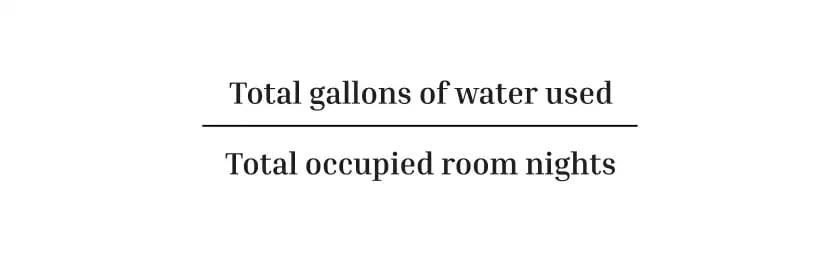
A higher water bill during your busiest month may not be surprising. But what happens when fewer guests are staying at your hotel and water consumption remains high? It could be a sign that your property is wasting water somewhere.
Compare this number each month to understand how efficiently your hotel uses water. You can also compare readings before and after installing water-saving devices to see whether your hotel cost reduction efforts are working.
If water use increases unexpectedly, investigate the common sources of commercial water waste before the next utility bill arrives.
Real Hotel Water Savings With The Water Scrooge™ Devices: How 26 Properties Reduced Water Use by 32%
The Water Scrooge™ installed more than 3,000 Toilet Scrooge™ valves across 26 economy apartment hotel properties in the United States to help control unnecessary toilet water use.
The goal was to limit continuous water waste from toilets, particularly when bathrooms were vacant.
Here are the results reported in the case study:
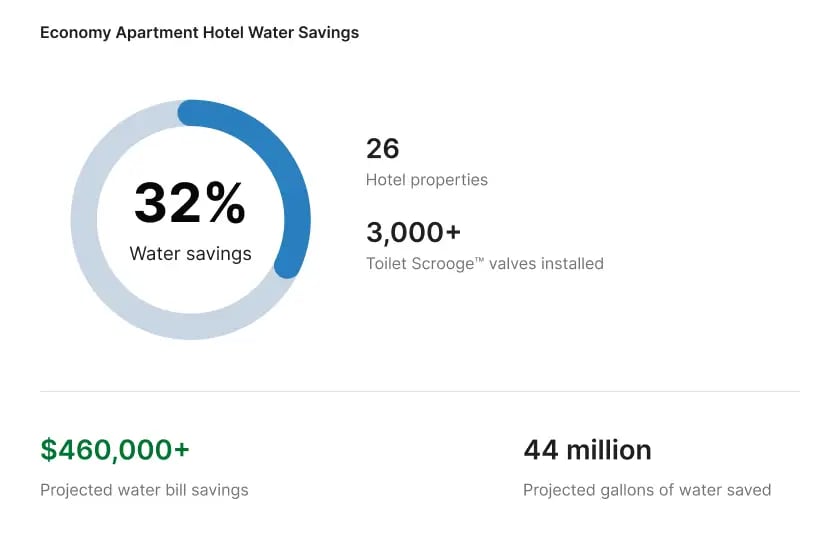
The properties achieved a reported average reduction in water consumption of approximately 32%. The case study also projected more than $460,000 in water bill savings and approximately 44 million gallons of water saved.
These results show how addressing a single source of water waste across multiple hotel rooms can make a significant financial difference.
Read the full case study hereLower Hotel Water Bills Without Compromising Guest Comfort
When looking at how to reduce hotel operating costs, one of your biggest concerns may be whether these changes will affect guest satisfaction.
After all, nobody wants to stay in a hotel with a weak shower, a toilet that doesn't flush properly, or a faucet that barely releases water.
The purpose of water conservation in hotels is to reduce unnecessary waste, not to limit the water guests need.
Before making changes across your entire property, consider the following:
- Test water-saving devices in a few guest rooms first.
- Check shower flow and comfort after installation.
- Make sure toilets flush and refill properly.
- Provide simple instructions for any new shower controls.
- Collect guest feedback before upgrading the remaining rooms.
- Monitor water consumption to measure the results.
Starting with a small group of rooms gives your maintenance team time to identify any issues and make necessary adjustments.
Once you find a setup that works for your property, you can gradually expand it to the remaining guest rooms.
Make Every Guest Room More Cost-Efficient
Lowering hotel operating costs doesn't always require cutting services or making expensive changes to your property. Sometimes, the biggest opportunities are hiding in the bathrooms your guests use every day.
Start by identifying where water is being wasted and making improvements that address those problems. By combining regular plumbing maintenance with the right water-saving devices, you can reduce unnecessary water consumption and better manage your hotel utility costs.
The Water Scrooge™ offers practical water-saving solutions that help hotel owners and property managers address everyday sources of water waste.
Whether you manage a small independent hotel or several large properties, making your guest bathrooms more water-efficient today can help you build a more profitable business over time.
|
Lower Your Hotel's Water Bills, Room by Room Find the right water-saving solutions for your property. Get a customized quote based on your hotel size, plumbing setup, and water-saving needs.
|
