


 David Schwartz
A high commercial water bill can be frustrating, especially when your building seems to be using the same amount of water as usual. For property owners and managers, these extra costs can quickly eat into a building's profits.
The problem is that not all water waste is easy to see. A running toilet, an old showerhead, or a leaking pipe can waste water every day without anyone noticing. Across dozens of apartments, hotel rooms, or commercial bathrooms, even small amounts of waste can add up.
The good news? You can take steps to control these costs.
By finding common sources of commercial water waste and installing the right water-saving devices, you can reduce unnecessary water use and help lower your building's operating expenses.
Let's look at seven common problems and the practical solutions that can help.
Why Is My Commercial Water Bill So High?
A high commercial water bill does not always mean people are using more water. Sometimes, the cost increases because water rates have gone up. Other times, the building may be wasting water without anyone knowing.
Here are some common reasons:
- Leaking toilets and faucets: Small leaks can continue for hours or days.
- High-flow showers: Older fixtures may use more water than needed.
- Hidden pipe leaks: Water can escape behind walls or underground.
- Wasted hot water: Showers may run for several minutes before anyone uses them.
- Water meter issues: Certain system conditions may affect how water use is recorded.
- Poor water monitoring: Unusual usage can go unnoticed for months.
Water and sewer rates can also change, even when consumption stays the same.
For commercial buildings, the biggest challenge is that water waste often happens in several places at once. Finding those problems is the first step toward reducing costs.
|
Don't Flush Water & Money Down the Drain Reduce water waste and lower your water charges with The Water Scrooge™ water-saving products.
|

7 Common Sources of Commercial Water Waste and How to Reduce Them
1. Running Toilets That Waste Water Around the Clock
A toilet that keeps running after flushing may seem like a small problem. But if water keeps filling in the tank and flowing into the bowl even when the seat is vacant, the building owner continues paying for it.
This often happens because of worn-out flappers, faulty fill valves, or other damaged toilet parts. Some leaks make noise, while others are almost silent.
How to reduce the waste:
Check toilets regularly and repair faulty parts as soon as possible.
You can also use an automatic toilet shut-off valve such as the Toilet Scrooge™. It automatically controls the toilet's water supply based on bathroom use. When the bathroom is vacant, the device shuts off the supply to the tank and helps stop continuous water waste.
This helps prevent a running toilet from wasting water until the underlying problem is repaired.
2. Showers Using More Water Than Needed
Showers are another common source of water waste, especially in apartment buildings, hotels, gyms, and other facilities with many bathrooms.
Older showerheads may release more water than needed for a comfortable shower. When this happens, the property pays for both the extra water and the energy used to heat it.
How to reduce the waste:
Installing a shower flow controller can help limit excess water use while keeping the shower comfortable.
The Shower Scrooge™ shower flow controller is designed to keep water flow more consistent as pressure changes. It also has a tamper-resistant design, making it harder for residents to remove or adjust without accessing the plumbing connection.
3. Water Wasted While Showers Warm Up
Have you ever turned on a shower and waited for the water to get warm? During that waiting time, clean water goes straight down the drain.
The property owner pays for that water and the energy used to warm it up.
How to reduce the waste:
The ShowerStop®, a device designed to reduce water wasted during shower warm-up.
When the water reaches the set temperature of 95°F, the ShowerStop® automatically reduces the flow until the person is ready to shower.
This helps prevent unnecessary water from running down the drain while someone is getting ready.
4. Water Meter Readings and Building Water Flow Issues
Most commercial properties depend on a main water meter to measure how much water enters the building. However, water systems can face changes in pressure and flow. Air may also be present in the water supply.
Under certain conditions, some types of water meters may measure air passing through the system. Whether this affects a particular bill depends on the meter and water system.
How to reduce the waste:
Start by asking your water utility to check unusual meter readings or billing concerns.
For suitable properties, the Smart Valve™ offers a building-level water flow management solution. A licensed plumber installs it near the building's main water meter, selecting it based on the property's pipe size, water pressure, and flow conditions.
The device is designed to manage flow conditions and reduce the volume of air that water meters are counting as usage.
But take note that this device does not fix faulty meters or hidden plumbing leaks. So, consider
5. Faucets That Use Too Much Water
Dripping faucets create another problem. Think about how many faucets are used every day in a commercial building.
People wash their hands, clean dishes, fill containers, and perform other daily tasks. If each faucet releases more water than necessary, the extra gallons can add up.
How to reduce the waste:
Start by inspecting faucets for leaks, worn washers, and damaged fittings. Installing water-efficient faucet aerators or flow regulators can also help. These small devices control how much water comes out of the faucet while keeping enough flow for everyday tasks.
6. Hidden Leaks in Pipes and Plumbing Systems
Not every water leak happens where people can see it.
Some leaks develop behind walls, beneath floors, or in underground pipes. These problems may continue for weeks before anyone notices them.
One warning sign is a sudden increase in water consumption without a clear reason.
How to reduce the waste:
Property managers should check water meters and review usage regularly. Look for signs such as damp walls, unexplained puddles, or water meter activity when no water should be running.
Leak detection sensors and professional plumbing inspections can help locate problems before they become more expensive.
If you suspect a hidden pipe leak, have a qualified plumber identify and repair it. A water-saving device cannot replace a necessary plumbing repair.
7. Poor Water Monitoring Across Multiple Units
A property manager may receive one water bill for an entire building. That bill shows the total consumption but does not always explain which apartment, bathroom, or plumbing fixture is responsible.
Without regular checks, a leaking toilet or excessive shower flow may continue for months.
How to reduce the waste:
- Create a simple water monitoring routine.
- Review water bills every month.
- Compare water consumption with previous periods.
- Check for sudden changes in usage.
- Inspect high-use areas such as bathrooms and laundry rooms.
- Record repairs and water-saving upgrades.
- Use submetering or leak monitoring tools where practical.
Monitoring helps you find problems. Installing suitable water-saving devices then helps control waste at its source.
The U.S. Environmental Protection Agency also recommends monitoring water use and repairing leaks as key steps in reducing commercial building water consumption.
How Much Can Commercial Properties Save With Water Saving Products?
The amount a commercial property can save depends on its current water use, plumbing condition, utility rates, and the devices installed.
A real example comes from Ayden Health Care in Oregon, Ohio.
The 58-bathroom healthcare facility installed The Toilet Scrooge™ along with shower and faucet regulators on December 18, 2025.
The goal was to reduce unnecessary water consumption and related utility expenses.
Here is what happened when the facility compared its water bills before and after installation.
|
Metric |
Before Installation |
After Installation |
|
Water consumption |
1,524 billing units |
759 billing units |
|
Total water-related charges |
$9,806.15 |
$5,214.09 |
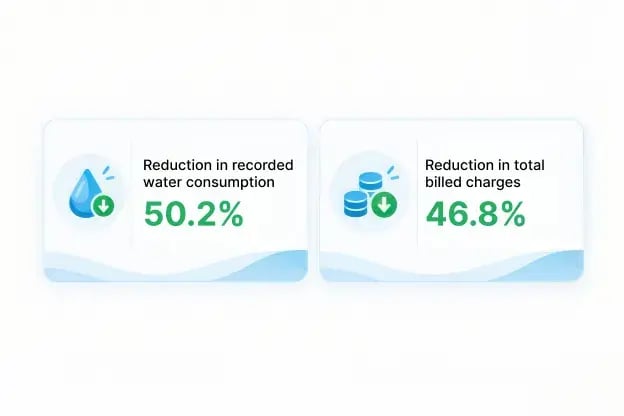
These results show how addressing multiple sources of water waste can help control operating expenses.
How to Choose the Right Water Saving Devices for Your Building
You do not need to install every water-saving product at once; here are the four simple steps to choose the right device:
Step 1: Review Your Water Bills
Look at your water consumption over the past several months. Compare usage, charges, and billing periods to identify unusual changes.
Step 2: Find the Biggest Sources of Waste
Check toilets, showers, faucets, and other plumbing fixtures. Watch for equipment that runs longer or uses more water than needed.
Step 3: Match the Device to the Problem
Choose a solution that directly addresses the waste. For example, use a toilet leak prevention valve for running toilets or a shower flow controller for excessive shower use.
Step 4: Track Your Results
After installation, compare water usage and bills. Account for changes in occupancy, weather, and utility rates.
|
Want to Know How Much You Can Save On Your Water Bills? Enter a few property-related details to get a calculated estimate of your savings.
|

Reduce Commercial Water Waste With The Water Scrooge™
A high commercial water bill does not always require an expensive plumbing upgrade.
Sometimes, the solution starts with finding a running toilet, controlling shower flow, fixing a hidden leak, or reducing water wasted before a shower begins.
The Water Scrooge™ offers water-saving products designed to help multifamily owners, landlords, property managers, and commercial facilities control unnecessary water use and reduce avoidable expenses.
From individual fixtures to building-level water flow management, choosing the right solution can help you take better control of your property's water costs.