


 David Schwartz
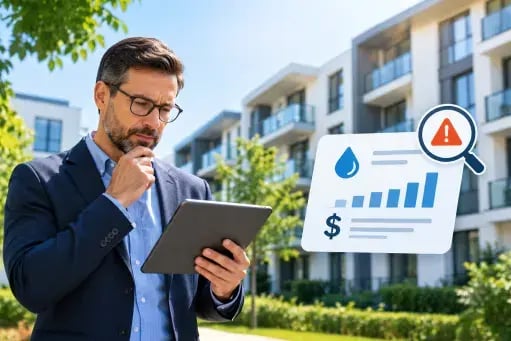
Your building's water bill keeps going up. But you haven't added more apartments, and the number of residents has not changed. So, why are you paying more?
If you're asking, "Why is my water bill so high?", the answer may be hiding in places you don't check every day.
A running toilet, a dripping faucet, a shower that uses too much water, or a hidden pipe leak can waste hundreds or even thousands of gallons. In a multifamily building, these small problems can add up quickly.
Sometimes, the problem isn't even extra water use. Changes in water rates, sewer charges, or water meter readings can also make your bill higher.
The good news is that you can find these problems and take steps to control them.
Let's look at eight hidden causes of high water bills in apartment buildings and what property managers can do about them.
8 Hidden Causes of a High Water Bill in Multifamily Buildings
A high water bill doesn't always mean residents are using more water. Sometimes, water is being wasted without anyone noticing. Here are eight common reasons your building may be using or paying for more water than expected:
1. Silent Toilet Leaks That Nobody Reports
Inside the toilet tank, a rubber part called a flapper controls when water moves from the tank into the bowl. If it becomes worn or does not close properly, water can slowly leak into the bowl.
Other problems, such as a faulty fill valve or a stuck handle, can also cause a toilet to keep running. The tricky part? Residents may not hear the leak or notice anything wrong. The toilet may still look and work normally.
Now imagine this happening in 10, 20, or 50 apartments. All that wasted water can add up to a much higher monthly bill.
What can property managers do?
- Check toilets regularly for running water.
- Ask maintenance teams to inspect toilet tanks.
- Use the food-coloring test to find silent leaks. Put a few drops of food coloring in the tank and wait 10 minutes without flushing. If the color appears in the bowl, the toilet is leaking.
- Repair faulty toilet parts as soon as possible.
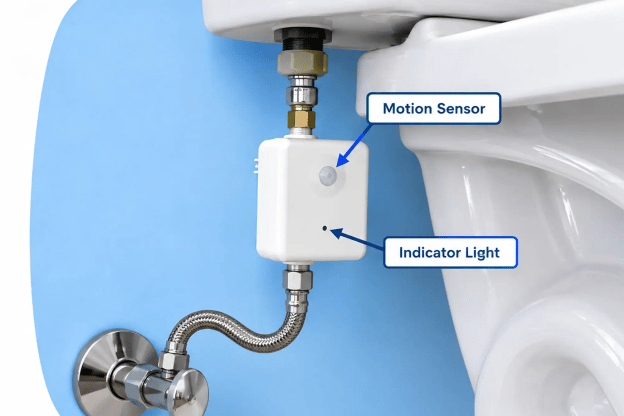
You can also consider an automatic toilet water shutoff solution. The Toilet Scrooge™ automatically controls the toilet's water supply based on bathroom occupancy. It shuts off the water when the bathroom is vacant, helping stop continuous water waste from running or leaking toilets.
2. Showers Using More Water Than Necessary
Showers are another major source of water use in apartment buildings.
Think about how many people take showers every day in a 50-unit or 100-unit property. Even a small amount of extra water used during each shower can add up across the entire building.
Older shower fixtures, high water pressure, and uncontrolled water flow can all contribute to higher shower water use.
What can property managers do?
- Check the flow rate of shower fixtures.
- Look for older or inefficient showerheads.
- Install shower flow controllers where suitable.
- Monitor water use before and after installation.
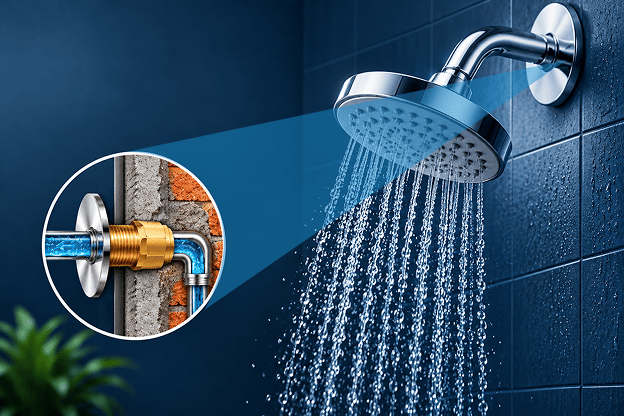
The Shower Scrooge™ Shower Flow Controller helps control unnecessary shower water flow. Its hidden, tamper-resistant design is useful for rental properties where residents should not be able to remove or change the device. It also uses pressure-compensating technology to help maintain more consistent water flow.
3. Water Wasted While Waiting for Showers to Get Warm
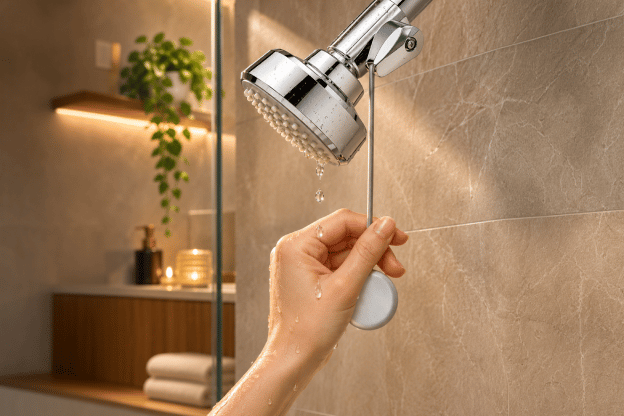
Have you ever turned on a shower and waited for the water to get warm? Most residents do this every day. While they wait, cold or lukewarm water flows straight down the drain.
One shower may not waste much water during warm-up. But think about hundreds of showers across an apartment building every week. That wasted water adds to the building's total water use. If the water is being heated before it reaches the shower, energy is wasted too.
What can property managers do?
Look for ways to reduce water that flows down the drain while residents wait for hot water.
One option is The ShowerStop®. It automatically reduces shower flow to a trickle when the water reaches approximately 95°F. This helps reduce unnecessary water and heating-energy waste while residents wait for the shower to warm up. Residents can restore the flow when they are ready to shower.
4. Dripping Faucets and Leaking Shower Fixtures
A dripping faucet may not seem like a big problem. But if it keeps dripping all day and night, the wasted water can add up. The same goes for leaking showerheads, loose connections, and damaged fixture parts.
These problems often go unnoticed because residents get used to the sound of a dripping faucet or simply don't report it. In a multifamily building, even a few small leaks in different apartments can increase total water use.
What can property managers do?
- Include faucets and shower fixtures in regular inspections.
- Check kitchens, bathrooms, laundry rooms, and common areas.
- Repair worn washers, seals, and loose connections.
- Encourage residents to report dripping faucets and leaking fixtures.
A simple maintenance schedule can help catch these problems before they lead to larger water losses.
|
Stop Water Waste Before It Increases Your Bills Small leaks and unnecessary water use across apartments can add up to a higher water bill quickly. The Water Scrooge products help control water and sewer waste, so your property can use water more wisely.
|

5. Hidden Leaks in Pipes and Underground Water Lines
Not all water leaks are easy to see. Some leaks happen behind walls, under floors, or in underground water lines.
These leaks can happen because of old pipes, damaged joints, corrosion, or changes in water pressure. Here are a few warning signs to watch for:
- Your water bill suddenly increases without a clear reason.
- You notice damp walls, floors, or ceilings.
- There are wet spots in areas that should be dry.
- Water pressure becomes weaker than usual.
- Your water meter keeps moving when no one should be using water.
What can property managers do?
First, check the building's water meter when residents and maintenance teams are not using water. If the meter continues to move, there may be a leak somewhere in the system.
However, some buildings have equipment that uses water even during quiet hours. Make sure those systems are not running before deciding there is a leak.
If you suspect a hidden leak, contact a licensed plumber to inspect the pipes and find the source. Finding a leak early can help prevent water waste, costly repairs, and damage to the property.
6. Irrigation Systems, Laundry Rooms, and Shared Amenities
Your building's water bill does not come only from individual apartments. Think about all the shared spaces and facilities that use water:
- Gardens and lawns
- Sprinkler and irrigation systems
- Shared laundry rooms
- Swimming pools
- Clubhouses and common bathrooms
- Cleaning and maintenance areas
A broken sprinkler head can keep releasing water even when nobody notices. A leaking laundry connection or an overflowing pool can also waste large amounts of water.
These areas are easy to overlook because maintenance teams often focus more on problems inside individual apartments.
What can property managers do?
- Inspect sprinkler heads and irrigation pipes.
- Check outdoor watering schedules.
- Look for leaks around laundry machines and shared sinks.
- Monitor swimming pool water levels.
- Include common areas in regular plumbing inspections.
The EPA's WaterSense program provides multifamily water assessment resources to help property owners and managers review water use in different parts of their buildings.
7. Changes in Water Rates, Sewer Charges, or Seasonal Usage
Sometimes, your building's water use has not increased at all. Yet the water bill is still higher. Why? Because the amount you pay depends on more than just the gallons of water your property uses.
Your utility bill may include:
- Water supply charges
- Sewer or wastewater charges
- Fixed service fees
- Other local utility charges
If the water or sewer rate increases, you may pay more even when your building uses the same amount of water.
Seasonal changes can also affect water use. For example, gardens may need more watering during hot summer months. More residents or visitors can also increase the amount of water used.
What can property managers do?
Compare your current bill with previous bills. Don't look only at the total amount due. Check these details as well:
- How many gallons did your building use?
- Has the price per unit of water increased?
- Have sewer or service charges changed?
- Is the increase related to a particular season?
- Has the number of residents or occupied units changed?
This simple comparison can help you understand whether your building is using more water or simply paying a higher rate.
8. Air in the Water Supply Affecting Water Meter Readings
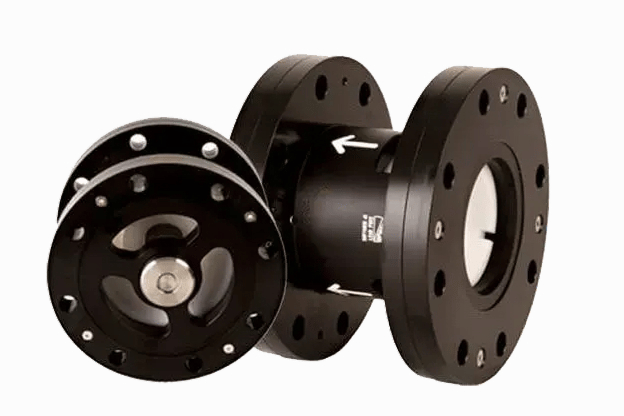
Here's something many property managers may not know: air can sometimes be present in a building's water supply. Depending on the type of water meter and the conditions in the water line, air passing through the meter may affect the volume recorded.
This is a different problem from a leaking toilet or dripping faucet. The issue may be related to what the meter records rather than how much water residents actually use.
What can property managers do?
If your building has an unusually high water bill that does not match its actual water use, ask a qualified plumber or water utility professional to review the meter, water supply, and plumbing setup.
You can also look into The Water Scrooge™ Smart Valve. It is designed to compress air in the water supply before it reaches the meter. This reduces the volume of air that may be recorded by the meter and reduces the water bills.
How to Find Out What Is Causing Your Building's High Water Bill
Knowing the possible causes is a good start. But how do you find the actual problem in your building? Start with these simple steps:
- Compare your last 12 months of water bills
- Check your main water meter
- Inspect toilets, showers, and faucets
- Check shared areas
- Review water and sewer charges
- If you cannot find the reason for the increase, get a professional water consulting service.
The EPA's WaterSense Multifamily Housing Assessment Worksheets can also help you create a list of water-using equipment and identify areas that need attention.
How to Lower Your Water Bill in an Apartment Building
Once you know where the extra water use is coming from, you can take steps to control it.
Here are some practical ways to reduce water bills in multifamily properties:
- Fix leaks quickly: Repair running toilets, dripping faucets, and damaged pipes as soon as possible.
- Control shower water flow: Install suitable shower flow controllers to help reduce unnecessary water use.
- Reduce shower warm-up waste: Use solutions that reduce water flow while residents wait for hot water.
- Inspect shared facilities: Check irrigation systems, laundry rooms, pools, and common bathrooms regularly.
- Track monthly water use: Compare water bills and meter readings to spot unusual changes.
- Use water-saving products: Install suitable water-saving devices across apartments and shared spaces.
- Train maintenance teams: Make water checks part of regular property maintenance.
Remember, one small problem in one apartment may not seem serious. But the same problem across 50 or 100 apartments can become a much bigger expense.
The goal is to find and control water waste across the entire property, not just in one unit.
Find the Hidden Cause Before Paying Another High Water Bill
A high water bill can be frustrating, especially when you don't know where the extra cost is coming from.
But the problem may be smaller than you think. A running toilet, an uncontrolled shower, wasted warm-up water, or a hidden plumbing issue can quietly increase your building's monthly expenses.
Start by checking your water bills, inspecting your fixtures, and finding out where water is being wasted. Then choose the right solutions to control those costs.
Don't pay for water your property doesn't need.
The Water Scrooge™ offers water saving products designed to help multifamily property managers reduce unnecessary water waste and manage monthly water costs.
|
Don't Let Water Waste Eat Into Your Property's Budget From running toilets to unnecessary shower water use, small problems can lead to bigger water bills. Find the right water saving solutions for your property and take control of unnecessary water waste.
|
