


 David Schwartz
Hot water can become a major operating cost in a multifamily property.
Every time a resident takes a shower, the property may be paying for both the water and the energy needed to heat it. The problem gets bigger when hot water runs down the drain before a resident even takes a shower.
That is why many property owners are looking at hot water-saving devices to control unnecessary use.
But not every device solves the same problem.
Some reduce how much water comes through the shower. Others make the water heater more efficient. And some help stop hot water from running when nobody is actually using it.
So, what works best for a multifamily property?
The answer starts with understanding where the waste is happening.
Why Hot Water Waste Matters in Multifamily Properties
A shower does not only cost money because of the water being used. The building also needs energy to heat that water.
According to the U.S. Department of Energy, water heating accounts for about 20% of the average home's energy use.
Showering is also one of the biggest uses of water inside a home. The EPA says showers account for nearly 17% of residential indoor water use. Now think about that across 50, 100, or 500 apartments.
For property owners, better hot water efficiency can help lower water use and reduce the energy needed to heat that water. This makes hot water an important part of any multifamily water conservation plan.
Where Does Shower Hot Water Get Wasted?
One of the easiest places to see hot water waste is in the shower. A resident turns on the shower and waits for it to get warm. But they may not stand there watching it. Instead, they may brush their teeth, choose their clothes, check their phone, or leave the bathroom for a few minutes.
The water eventually gets hot, but it can continue running even though the resident is not ready to get in.
At that point, the property is paying for water that goes directly down the drain. It is also paying for the energy used to heat that water.
The Water Scrooge calls this “behavioral waste.” Its ShowerStop® hot water-saving device helps landlords control hot water waste across their multi-unit property easily.
What Types of Hot Water Saving Devices Are Available?
There is no single device that solves every hot water problem. Here are some of the most common options.
1. Low-Flow Showerheads
Low-flow showerheads reduce the amount of water flowing through the shower. This can work.
EPA WaterSense-labeled showerheads use no more than 2.0 gallons per minute while meeting WaterSense performance requirements. EPA estimates that replacing one standard showerhead with a WaterSense-labeled model can save the average family about 2,700 gallons of water each year. Using less hot water also reduces the energy needed to heat it.
The challenge for multifamily properties is keeping the desired flow rate in place.
Residents may change an accessible showerhead or remove an accessible flow restrictor. That can reduce the long-term benefit for the property owner.
2. Shower Flow Controllers
A shower flow controller regulates how much water can move through the shower.
The Shower Scrooge™ Shower flow controller takes this approach differently from a standard low-flow showerhead.
The device is installed behind the shower fixture, keeping the flow-control component out of sight and making it harder for residents to change or remove. It also uses pressure-compensating technology to help manage differences in water pressure.
These shower water-saving devices are useful when the goal is to control how much water is used during the shower itself.
But there is another kind of waste to consider. What happens while the resident is waiting for the shower to warm up?
3. Hot Water Saver Valves
A Hot water saver valve can target the warm-up period before the resident enters the shower.
This is important because a regular flow controller reduces the flow rate, but water can still keep running while the resident is away.
A temperature-activated valve takes a different approach.
It responds when hot water reaches the shower and reduces the flow until the resident is actually ready.
That makes this type of technology one of the more targeted hot water conservation devices for properties trying to control shower warm-up waste.
How ShowerStop® Helps Reduce Hot Water Waste
-1.webp)
The Water Scrooge™ ShowerStop® Solution is designed around a simple idea: ‘Hot water arrives. Waste stops.’ Here is how it works:
The resident turns on the shower normally. Water begins flowing while it warms up.
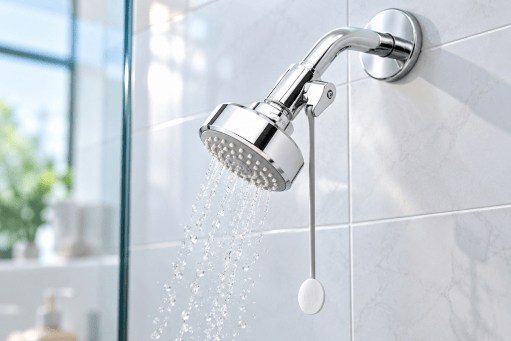
When the water reaching the shower reaches approximately 95°F, ShowerStop® automatically reduces the water flow to a trickle.
Use The Water Scrooge solutions to identify opportunities to reduce water and hot-water waste across your units.
The resident can then restore normal water flow when ready to shower by activating the supplied control.
The resident does not need to stand next to the shower waiting for the exact moment the water gets hot.
And the property does not need to keep sending a full stream of hot water down the drain while the resident is somewhere else.
That is what makes this type of hot water saver valve different from simply installing a lower-flow showerhead.
Saving Hot Water Can Also Mean Saving Energy
This is one of the biggest reasons to focus on hot water instead of looking only at gallons.
Water has to be treated and delivered to the property. Then, when hot water is needed, energy has to be used to heat it.
EPA specifically includes avoided water-heating energy when calculating the benefits of water-efficient products. In simple terms, using less hot water can mean using less energy to heat water.
That creates two possible areas for savings:
- Water and sewer costs can decrease when fewer gallons are wasted.
- Water-heating costs can decrease when less hot water needs to be produced.
For a multifamily owner paying these utility bills, that makes Energy and Water Savings for Multifamily Properties closely connected.
|
Want to know what unnecessary water use may be costing your property? Use The Water Scrooge solutions to identify opportunities to reduce water and hot-water waste across your units.
|

ShowerStop® vs. Regular Shower Water Saving Devices
The important difference between the ShowerStop® and other regular shower water-saving devices is when the device controls water.
A normal shower flow controller focuses on the amount of water being used during the shower. ShowerStop® focuses on hot water that may be wasted before the shower begins.
That means these technologies can address different problems.
For example:
| Solution | Main Problem It Addresses |
|---|---|
| Low-flow showerhead | High shower flow |
| Shower flow controller | Excess water use during the shower |
| ShowerStop® | Hot water running during shower warm-up |
| Efficient water heater | Energy used to produce hot water |
| Leak-prevention device | Water lost through plumbing or fixture leaks |
For properties trying to reduce shower water waste, the right approach may involve more than one device.
The goal is not simply to install something labeled “water-saving.” The goal is to find where water is being wasted and use the right product for that problem.
What Should Multifamily Owners Look for in Hot Water Saving Solutions?
Before choosing hot water saving devices, property owners should ask a few simple questions.
- What kind of waste are we trying to stop?
If too much water is being used during showers, flow control may help. If hot water is running while residents wait, warm-up control may be more useful. - Does the device work automatically?
The less a conservation plan depends on residents remembering what to do, the easier it can be to maintain across many apartments. - Will residents still be comfortable?
Saving water should not mean giving residents an uncomfortable shower. ShowerStop® is designed to reduce warm-up waste without asking residents to take shorter or colder showers. - Can the solution work across many units?
A device that works in one bathroom should also be practical to install and manage across dozens or hundreds of apartments. - Can savings be measured?
Property owners should compare water and energy use before and after improvements. EPA also recommends benchmarking and water assessments to help multifamily properties identify and prioritize water-efficiency projects. These questions make it easier to choose hot water saving solutions based on the actual problem instead of choosing a product based only on its name.
So, What Hot Water Saving Devices Actually Work?
The best device depends on where the waste is happening.
If the problem is high shower flow, a flow-control device can help.
If the problem is an inefficient water heater, improving the water-heating system may help.
But if hot water is running down the drain while residents wait for showers to warm up, a temperature-activated solution such as ShowerStop® directly targets that waste.
That is an important difference. The goal is not to ask residents to give up comfortable showers. The goal is to stop paying to heat water that nobody is using.
For multifamily owners, the right hot water saving devices can help reduce unnecessary water use, improve hot water efficiency, lower water-heating demand, and create a smarter approach to controlling utility costs.
|
Ready to Reduce Hot Water Waste? Cut unnecessary hot water use during shower warm-up with ShowerStop®.
|
